

Hand spinning on an electric spinning wheel
The Alphasur – Wonderlana Workshop
The baby alpaca fiber is carded and combed mechanically before being hand-spun by a group of skilled women. The spinning is done manually on an electrically powered spinning wheel. The device resembles a sewing machine, with foot control to regulate the speed.
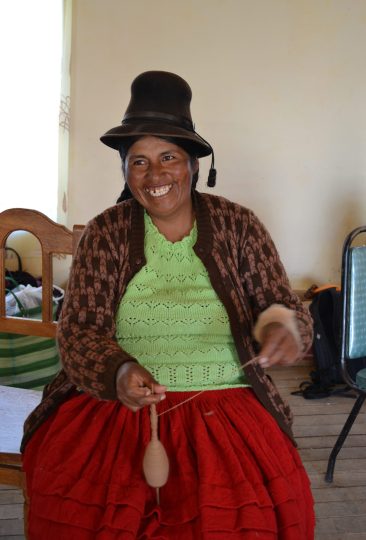
Hand spinning with a spindle
Spinning can be done in several ways. For example, the artisan knitters of the Arte-Aymara association also spin alpaca fiber, but they do so using a spindle. This more basic tool is better suited to their daily lives. The artisans often move around a lot to tend to the animals and take care of various agricultural and family tasks. The spindle is very small and can be carried in a handbag, making it much more practical than a spinning wheel! The spindle is also the typical tool that every alpaca farmer owns. It is a traditional, symbolic tool, which we have incorporated into the PachaMama Canada logo to highlight this tradition that must be preserved. You can find more details about the spinning technique used by the knitters of Arte-Aymara on this page.
*SECTION UNDER CONSTRUCTION*
Natural Dyes
The workshop is also where natural dyes derived from plants and insects (such as cochineal – see explanation below) are prepared. Recovering the knowledge of traditional methods has allowed the team to standardize ancient recipes, offering us a variety of unique colors.
The skeins of yarn are soaked in plant and/or insect infusions to absorb the color pigments. Before this, a natural mordant solution made from alum and cream of tartar is used to properly fix the dyes.
Cochineal

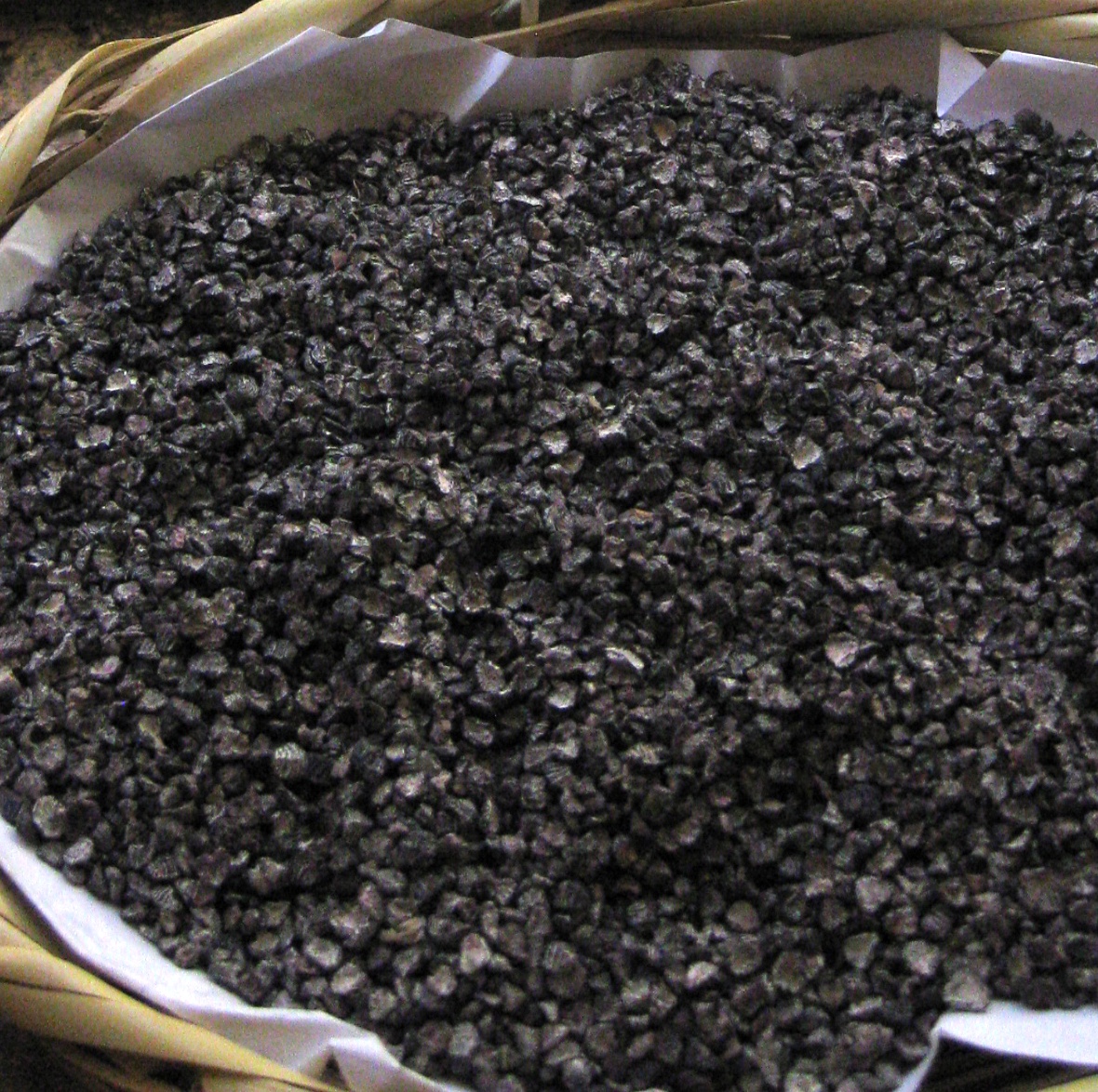
Cochineal, an insect found in large numbers on Andean cacti and also bred in captivity, is used to produce a variety of red, pink, and purple hues.
It was the Aztecs of Mexico who were the first to farm Dactylopius coccus for its rich red and purple dyes. The cactus parasite quickly became highly prized by Spanish colonizers, who turned it into a key commodity in international trade. During the spice trade era, dyes, especially the vibrant “carmine” red, were in high demand. This particular color also has a place in Canadian history, as it was used in the making of the Royal Canadian Mounted Police uniforms.
The red dye from cochineal is named after carminic acid, which is found in both the body and the eggs produced by the female insect. Carminic acid acts as a natural pesticide to protect the cochineal from predators. In addition to its use in textiles, cochineal is still employed today as a food coloring.
Dactylopius coccus is found in abundance on Opuntia cacti, primarily cultivated in Latin America. Peru is the world’s largest producer of cochineal, but the breeding of cochineal is practiced in various regions around the world.
– Sources: sciencepresse.qc.ca, lesfilsdutemps.free.fr/tincto.htm, marchand.d.idees.free.fr
