

The art of fur craft
At PachaMama Canada, every alpaca fur plush toy, slipper, or hat is shaped by the hands of Jesús and his team of fur artisans in Peru.*
Here, step by step, is the craftsmanship behind each piece.
Preparation
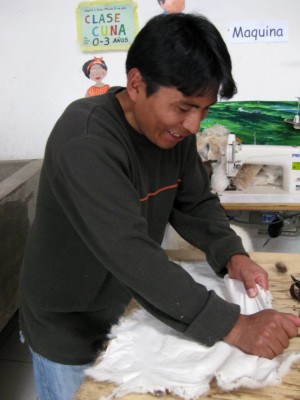
After tanning and cleaning, the hides must be stretched to soften them and achieve a smooth working surface.
Pattern creation

Jesus has mastered the art of creating his own patterns. He proudly says that his designs are one-of-a-kind!

Tracing and cutting
Using the patterns, each piece is traced onto the fur and numbered, arranging the layout to make the most of every inch of material — even the scraps are stitched back together to form other pieces.
Using a sharp knife, the pieces are then cut out.
Assembly and sewing
The fur pieces are sewn together by machine.
This work requires a great deal of manual dexterity, as the shapes are rarely straight, and many of the pieces are very small.
When looking at the finished product, it’s hard to imagine how many pieces it contains! For example, teddy bears require up to 28 pieces, while slippers are made up of 11 pieces.


Turning
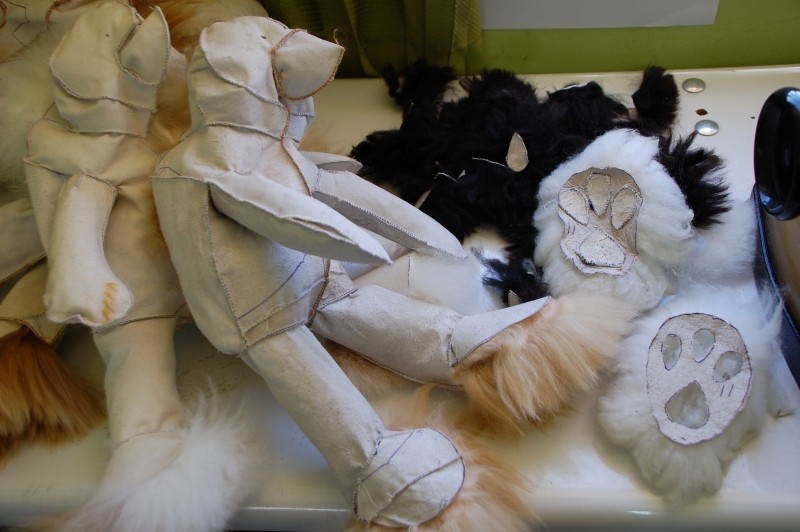
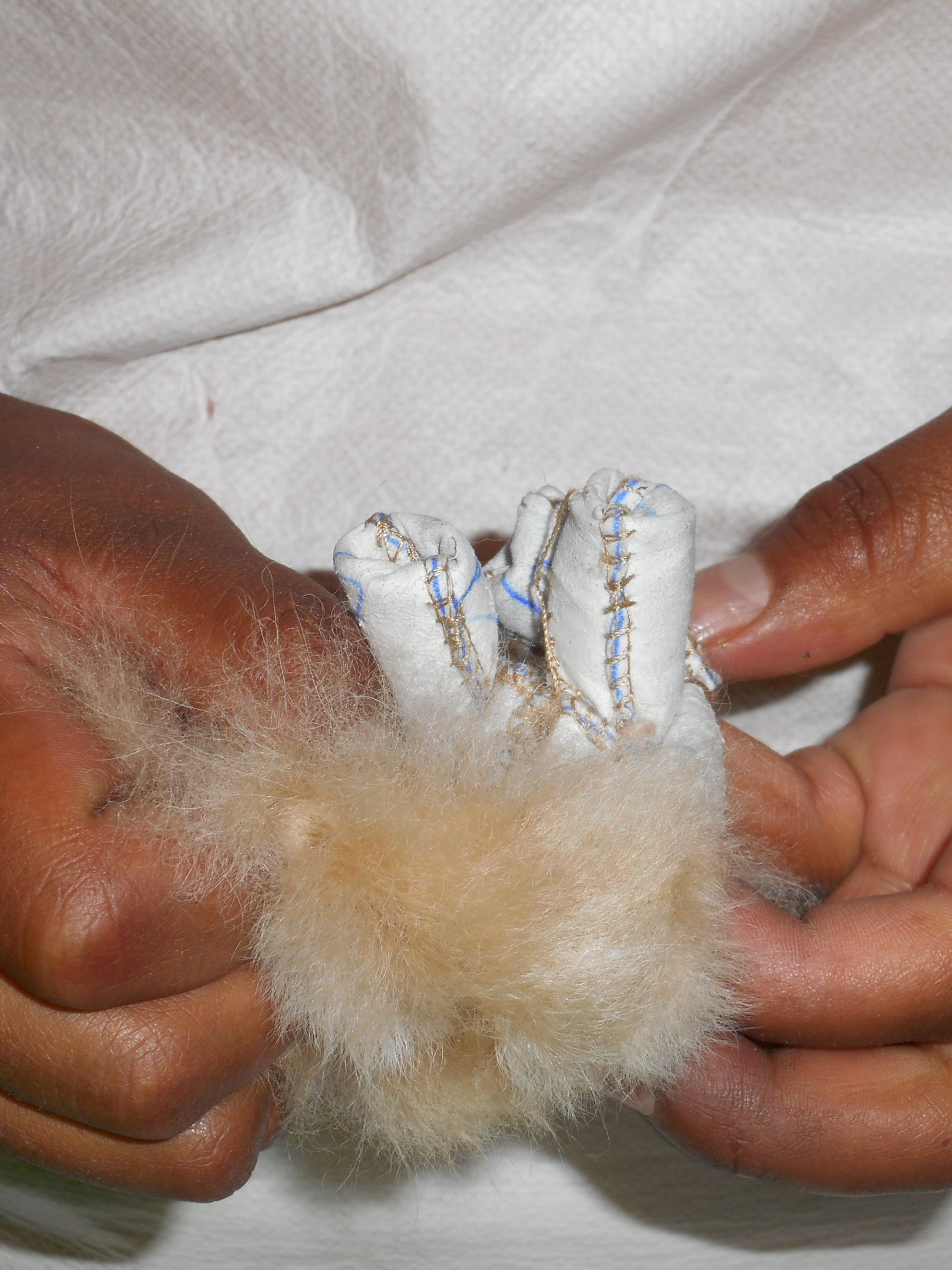
Sewn almost entirely inside out, the piece is then turned right side out through a small opening — a delicate task, often done with tweezers. The smaller the piece, the longer this step takes.
Finishing steps
Finishing involves multiple steps and takes up nearly half the total work time. Plush toys and pom-poms are stuffed with polyester before being closed with one final hand stitch.
Then the products head to the hairdresser! Using sharp scissors, our master furriers give each piece a finishing trim, for that beautifully neat look we’re so proud of at PachaMama ♥


*Animal-friendly Fur
No animals are killed for their fur.
Peru’s alpacas are raised in the open air, high in the Andes mountains. They are bred first and foremost for their beautiful fiber, which is sheared once a year. Alpaca fiber is a renewable material used to make warm, eco-friendly knitwear and woven goods.
Secondly, the animals are used for meat consumtion. Alpaca is a staple food for communities that raise camelids, since most alpaca herders live at very high altitudes where the land is unsuitable for growing crops — meat from their herds is the only food source they can produce. What’s more, 40 to 60% of baby alpacas die naturally due to the extremely harsh climate conditions in the Andes. The meat is consumed, and the fur is used for craftsmanship. In effect, using alpaca fur is a matter of making the most of a by-product.
